Upcoming Events

Cloud Connect
Santa Clara
Feb 13-16, 2012

Cloud Connect brings together the entire cloud eco-system to better understand the transformation we're experiencing and promises to be the defining event of the cloud computing industry. Learn about the latest cloud technologies and platforms from thought leaders in Cloud Connect’s comprehensive conference.

Register Now!

More Events »

Subscribe to Newsletter

  • Keep up with all of the latest news and analysis on the fast-moving IT industry with Network Computing newsletters.
Sign Up

Email Email  Print  Share


MySpace Finds Unique Use For SSD Technology

Tags: ,

Channel: Tapes and Disks, Data Center, Servers & Storage

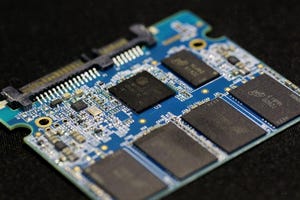
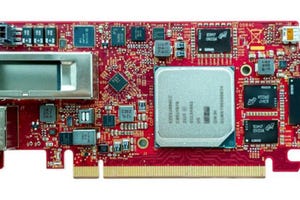
Companies in the IT industry can be ingenious, sometimes jerry-rigging different technologies to meet their own unique computing needs. MySpace, a well-known provider of social networking software and services, fits into that category. The company applied SSD technology, not to one of its typical uses, such as speeding up disk storage, but as a replacement for servers that acted as RAM cache for data intensive applications. By making the change, they reduced server requirements significantly.

MySpace has more than 100 million active users, including 68 million individuals in the US and provides a variety of services, such as MySpace Music, a video platform, MySpace Apps, a celebrity hub, an area for comedians, MySpace Fashion, MySpace Games, MySpace Local (a community of small business profiles) and  MySpace Mobile. Founded in 2004, MySpace is now a division of News Corporation

To support its services, the company has three data centers located in Los Angeles, Chandler, Az. and Ashburn, Va., with a fourth being built in Las Vegas. These sites contain more than 10,000 servers to deliver MySpace services. The systems largely run Microsoft Windows, but there is a sprinkling of Linux in the data centers. MySpace also relies on Fiber Channel SANs and host bus adapters to move its data.  The company depends on information so heavily that it built its own file system about four years ago, which runs on commodity hardware, primarily from HP, and includes a home-grown storage administration system. The volume of data managed, growing at a rate of about 25 percent per year, is approaching the 10P byte range.

MySpace was interested in SSD technology as soon as the rumblings about it first surfaced in 2007. "We liked the concept early on, mainly because of the I/OPs gained compared to spinning disk, but the products were ridiculously expensive," said Richard Buckingham, VP of technical operations. Compounding the issue was nascent nature SSD products. Vendors' drivers and firmware were not ready because the suppliers did not have enough experience to figure out what problems might arise. Storage system's SATA interface was another issue. If a company put a fast drive in behind a slow controller, the new configuration would not boost performance.

Consequently, interest moved to the backburner for about 18 months. In late 2008, MySpace talked to Fusion- io and Intel, which had introduced its new x25 Flash storage systems, about how Flash could improve its operation. Initially, the expectation was that MySpace could plug the technology in and it would speed up its applications, however, they found that performance improvements were workload dependent. "With a slight change in an application, workloads could see performance fluctuations of 10 to 1 or more," said Buckingham.


Page:  1 | 2 |Next Page »

Related Reading


More data-center Insights


Currently we allow the following HTML tags in comments:

Single tags

These tags can be used alone and don't need an ending tag.

<br> Defines a single line break

<hr> Defines a horizontal line

Matching tags

These require an ending tag - e.g. <i>italic text</i>

<a> Defines an anchor

<b> Defines bold text

<big> Defines big text

<blockquote> Defines a long quotation

<caption> Defines a table caption

<cite> Defines a citation

<code> Defines computer code text

<em> Defines emphasized text

<fieldset> Defines a border around elements in a form

<h1> This is heading 1

<h2> This is heading 2

<h3> This is heading 3

<h4> This is heading 4

<h5> This is heading 5

<h6> This is heading 6

<i> Defines italic text

<p> Defines a paragraph

<pre> Defines preformatted text

<q> Defines a short quotation

<samp> Defines sample computer code text

<small> Defines small text

<span> Defines a section in a document

<s> Defines strikethrough text

<strike> Defines strikethrough text

<strong> Defines strong text

<sub> Defines subscripted text

<sup> Defines superscripted text

<u> Defines underlined text

Network Computing encourages readers to engage in spirited, healthy debate, including taking us to task. However, Network Computing moderates all comments posted to our site, and reserves the right to modify or remove any content that it determines to be derogatory, offensive, inflammatory, vulgar, irrelevant/off-topic, racist or obvious marketing/SPAM. Network Computing further reserves the right to disable the profile of any commenter participating in said activities.

 
Disqus Tips To upload an avatar photo, first complete your Disqus profile. | View the list of supported HTML tags you can use to style comments. | Please read our commenting policy.


 

Research and Reports

Hypervisor Derby
August 2011

Network Computing: August 2011

TechWeb Careers